


Graduating from college brings a strange mix of excitement and uncertainty. One day, you’re finishing assignments and celebrating with friends. The next, you’re staring at your laptop, wondering how to turn everything you’ve learned into a steady income.
Maybe you’re starting a YouTube channel, editing videos for clients, writing articles, or helping small businesses with social media. Whatever your path, content creation gives you the chance to build a career around something you enjoy.
But creative freedom comes with financial responsibilities. Some months, projects arrive faster than you can finish them. Other months, you’re checking your inbox, hoping a client finally sends that overdue payment. So how do you manage your money when your income doesn’t follow a predictable schedule?
It starts with a few practical habits. You don’t need to have everything figured out. You just need a plan that helps you stay organized, prepare for slower months, and make thoughtful decisions as your career grows.
Understand Where Your Money Stands
Before buying a new camera or signing up for another editing subscription, take a close look at your finances. Start with what you have today, not what you hope to earn next year. Write down your monthly expenses, including rent, groceries, transportation, internet, insurance, subscriptions, and student loan payments. Include smaller purchases too. They might seem harmless on their own, but they add up.
Next, look at your income.
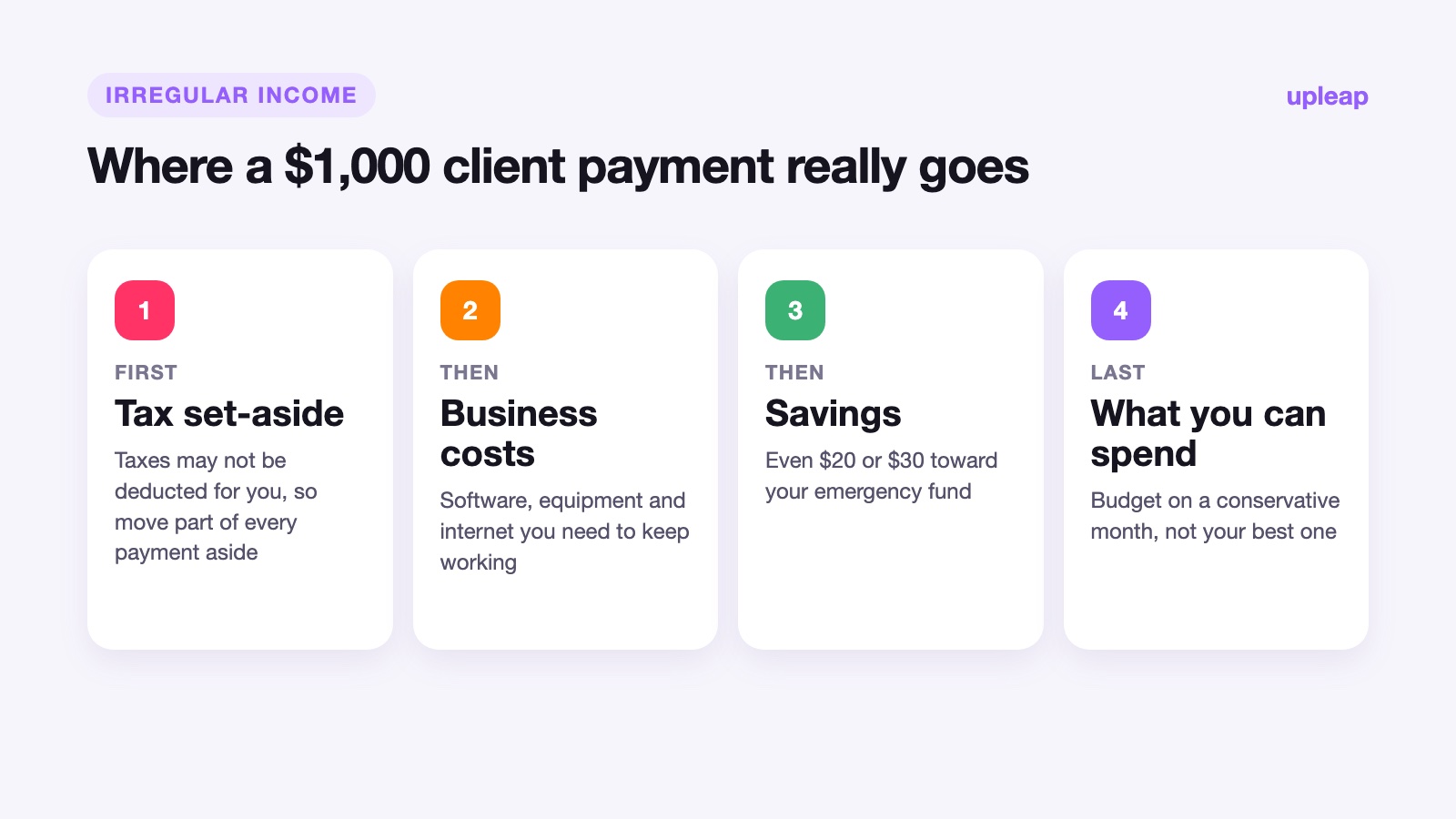
If you’re freelancing, remember that a $1,000 project doesn’t mean you have $1,000 available to spend. Taxes, software, equipment, and other business costs may need to come out of that payment. Seeing everything written down can feel uncomfortable, especially when you’re just getting started. But knowing your numbers is better than worrying about them in the background. You don’t need a perfect financial situation to make progress. You just need an honest picture of where you stand.
Create a Budget That Works With Irregular Income
Most budgeting advice assumes you receive the same paycheck every month. Content creation rarely works that way. One client might pay within days, while another takes several weeks. Brand partnerships can fall through, and earnings from online platforms may change without warning. When your bills stay the same but your income changes, a flexible budget becomes essential.
Know Your Monthly Minimum
Calculate how much you need each month to cover basic living expenses. For example, if rent, groceries, transportation, insurance, and other essentials cost $1,800, that’s your starting point. Knowing this amount helps you set realistic income goals and decide how much you can spend on nonessential purchases.
Try building your budget around a conservative income estimate rather than your best month. And when you earn more than expected, save some of that extra money before spending it. A strong month can help cover a slower one.
Keep Business and Personal Money Separate
If you’re earning money through freelance or independent creative work, consider using a dedicated bank account for your business. It makes tracking payments, managing expenses, and preparing tax records much easier. You can also see how much your work is actually bringing in after expenses.
It might seem unnecessary when you’re working with only one or two clients. But as your workload grows, having a simple system in place can save you time and stress.
Build an Emergency Fund for Unexpected Expenses
Imagine spending an entire weekend editing a client project, only for your laptop to stop working before the final export. Or opening an email to discover that a brand has postponed the campaign you were counting on. That sinking feeling is familiar to many freelancers.
Unexpected setbacks are stressful enough without worrying about how you’ll pay your bills. An emergency fund gives you some breathing room. Start with a manageable goal, perhaps $500 or $1,000. Once you’ve reached it, gradually work toward saving three to six months of essential expenses. You don’t have to save everything at once.
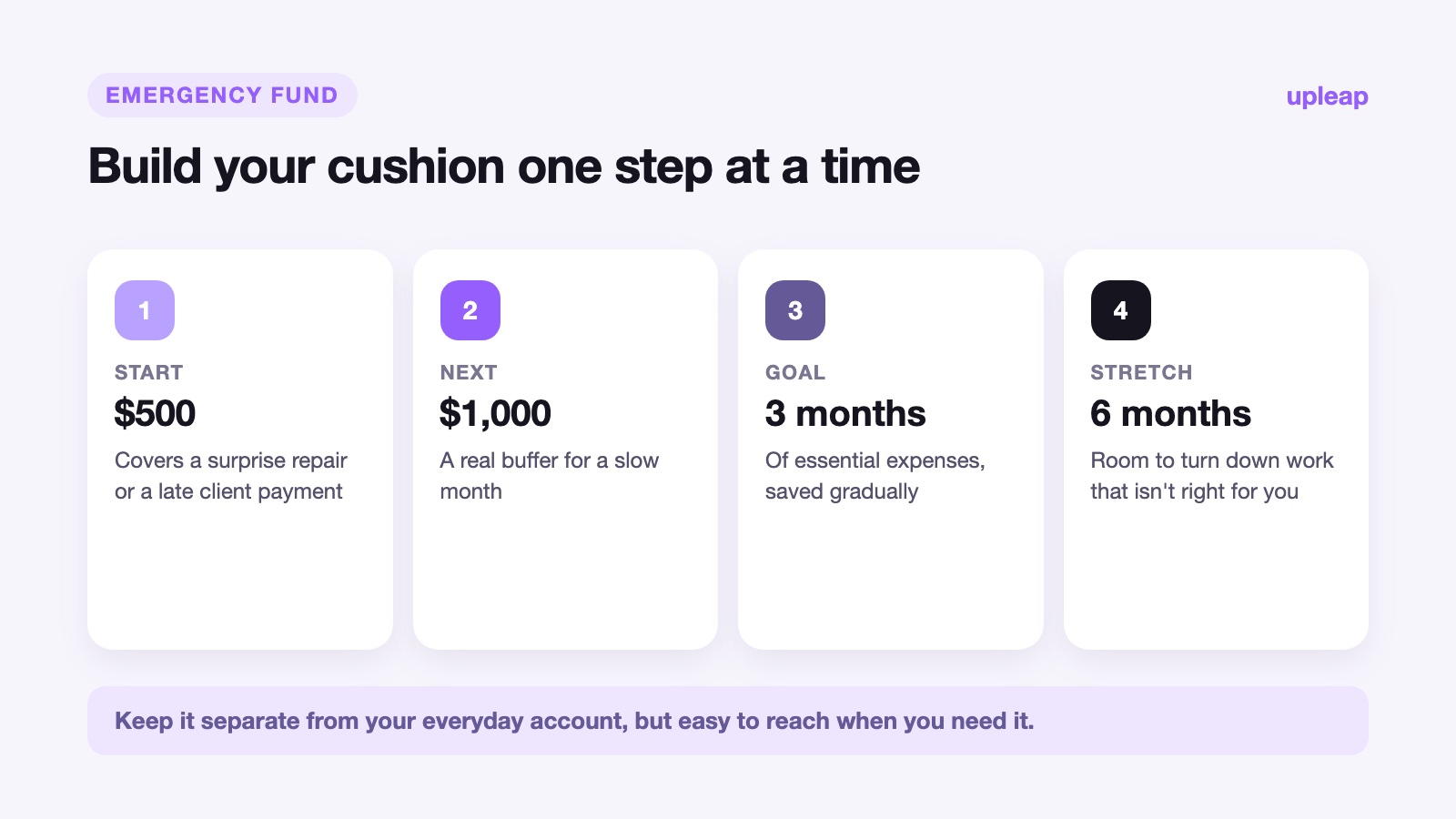
Even setting aside $20 or $30 from each payment can help you build the habit. Keep the money separate from your everyday spending account, but somewhere you can access it when needed. An emergency fund won’t prevent difficult months. It can, however, help you handle them without immediately relying on credit cards or taking on work that isn’t right for you.
Make Student Loan Payments Part of Your Financial Plan
For many graduates, student loans are one of the largest expenses that follow them into working life. Those payments can feel especially demanding when you’re building a career with irregular income. Start by reviewing your loan balances, interest rates, repayment terms, and payment deadlines.
Knowing what you owe helps you understand which repayment strategies might suit your situation. If you have federal student loans, explore the repayment plans and borrower protections currently available. Depending on your circumstances, some options may provide greater flexibility. You can also research student refinancing options to understand whether replacing existing loans with a new private loan could make financial sense. For eligible borrowers, refinancing may offer a lower interest rate or different repayment terms.
There’s also an important tradeoff. Refinancing federal student loans through a private lender means permanently losing access to federal benefits, including certain repayment protections and forgiveness programs. That matters when your income is still unpredictable. Before making a decision, consider the total repayment cost, the benefits you might lose, and how much financial flexibility you’ll need. A lower monthly payment isn’t always the least expensive option over time.
Invest in Your Skills Before Expensive Equipment
Spend a few minutes browsing creator content, and you’ll probably come across someone working in a beautiful studio. Professional cameras, perfect lighting, powerful computers, and expensive editing software. Then you look at your own setup. Maybe it’s a laptop on the kitchen table, an old pair of headphones, and a coffee cup that’s been sitting there since morning.
It’s easy to feel behind.
But you don’t need expensive equipment to create valuable work. Before buying something new, ask yourself whether it will improve your results, save time, or help you earn more. If your laptop still handles your editing projects, an upgrade can probably wait. If natural lighting works for your videos, you might not need studio lights yet. Sometimes, learning a new skill or improving how you work with clients will do more for your career than another piece of equipment. You can also rent gear, buy refurbished products, or use free software while your income grows. Good tools matter, but knowing when to invest matters just as much.
Prepare for Taxes Before They Become Stressful
Taxes probably weren’t part of the dream when you decided to become a content creator. You wanted to make things, share ideas, and work on interesting projects. Not spend your evenings sorting through receipts. But managing taxes is part of working for yourself.
If you’re freelancing or running a creative business, taxes may not be automatically deducted from your earnings. Depending on where you live, you might need to calculate and pay them yourself. A useful habit is setting aside part of every payment for potential tax obligations. Keep records of business expenses too. Editing software, equipment, internet services, and work-related travel may qualify for deductions under applicable rules.
You don’t need a complicated system to get started. A simple spreadsheet or bookkeeping app can help you track income and expenses throughout the year. As your income grows, consider speaking with a qualified tax professional. A little organization now can save you plenty of stress later.
Create More Income Opportunities Without Burning Out
Depending on one client or platform for all your income can be risky. A client might suddenly reduce their budget. A platform could change its monetization rules. A partnership may end without much warning. Having more than one source of income can help reduce that risk.
For example, a video editor might combine freelance projects with selling editing templates. A writer could offer content strategy services alongside regular client work. A photographer might take commercial assignments and eventually teach workshops.
There are plenty of possibilities.
But trying to build several income streams at once can leave you exhausted. You might find yourself working through every weekend, constantly chasing the next opportunity. And that’s not a healthy way to build a lasting career. Focus on making one source of income dependable before adding another. Slow growth is still progress. Your energy matters, and protecting it is part of planning for the future.
Start Saving for the Life You Want
When you’ve just graduated, retirement can feel far away. You’re probably more focused on finding clients, paying rent, or replacing an old laptop.
That’s understandable.
Still, the financial habits you build now can make your future more flexible. If you have a traditional job alongside your creative work, check whether your employer offers retirement benefits. If you’re self-employed, explore the retirement savings options available in your country. Even small, regular contributions can grow over time, although investment returns aren’t guaranteed.
And remember, saving isn’t only about retirement. Maybe you want to build a home studio, take a professional course, move into your own apartment, or eventually focus entirely on personal projects. These goals deserve a place in your financial plan too. Because saving money isn’t just about preparing for emergencies or distant milestones. It’s about giving yourself more choices as your life changes.
Build Financial Stability Without Losing Your Creative Freedom
Starting a career in content creation rarely follows a straight path. There’ll be months when everything seems to fall into place. Projects come together, clients pay on time, and new opportunities appear. Then there’ll be quieter stretches. Maybe a project gets canceled. Maybe a client disappears. Maybe you’re still working late, listening to the soft hum of your laptop and wondering whether you’re making enough progress.
Those moments can feel lonely.
But having a financial plan makes them easier to manage. You don’t need a huge income or a perfect budget to begin. Understand your expenses. Plan around what you earn. Save when you can. Stay thoughtful about debt, and invest in the skills and tools that genuinely support your work. Some months will be better than others. That’s part of building something of your own. What matters is creating habits you can return to when things feel uncertain.
Because financial stability isn’t only about paying your bills. It’s about being able to turn down a project that doesn’t fit your goals. Take a day off without feeling guilty. Spend time creating something meaningful, even when there’s no immediate paycheck attached. That’s the kind of freedom worth planning for.
And it starts with the small financial decisions you make today.
