


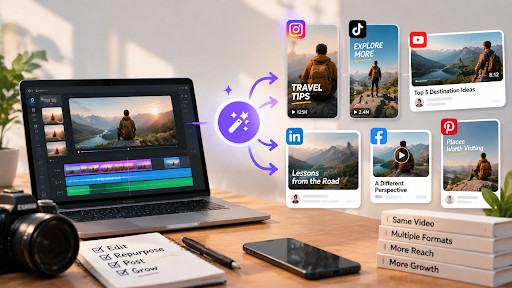
Creating consistent content is one of the biggest challenges for social media creators.
Most creators do not struggle because they lack ideas. The bigger challenge is turning those ideas into enough content to stay active across different platforms. A single podcast, interview, tutorial, or long-form video may contain several valuable moments, but finding, editing, and preparing those moments for different audiences can take hours.
This is where content repurposing becomes an important part of a creator’s workflow.
Instead of treating every post as a separate project, creators can turn one piece of content into multiple formats. This approach helps save time, maintain consistency, and get more value from every recording session.
Why Content Repurposing Matters for Creators
Social media platforms reward creators who can consistently publish valuable content. However, creating new videos from scratch every day is not always realistic.
A creator recording a 30-minute interview may have multiple sections that can work as short-form videos. A tutorial can become several educational clips. A podcast episode can create discussions, highlights, and short insights that reach different audiences.
The purpose of repurposing is not simply copying the same content everywhere. It is about identifying valuable ideas and presenting them in a way that fits each platform. Understanding how to create social media videos that drive engagement can help creators decide which moments deserve to become standalone pieces of content.
This allows creators to focus more on storytelling while building a more sustainable content process.
Turning One Video Into Multiple Content Opportunities
The first step in repurposing content is understanding that every long-form video contains multiple smaller stories.
A creator might record a detailed discussion that includes personal experiences, useful advice, common questions, or strong opinions. Each of these moments can become its own piece of content.
For example, a podcast episode could become short clips for Instagram Reels, educational videos for YouTube Shorts, and discussion-based posts for other platforms.
The challenge is finding these moments quickly and turning them into polished content without spending more time editing than creating.
This is where a structured editing workflow becomes valuable.
How Invideo Editor Helps Creators Repurpose Content Faster
Repurposing content requires more than cutting a long video into shorter clips. Creators also need to maintain quality, improve pacing, adjust visuals, and make sure each version feels suitable for the platform where it will be published.
Invideo editor helps creators manage this process by combining AI-assisted editing workflows with professional editing controls. Instead of manually handling every repetitive editing task, creators can work with their footage, refine clips, and prepare different versions while keeping control over the final result.
When creators create multiple versions of the same video, visual consistency becomes important. A clip taken from a longer recording may need adjustments to exposure, colors, and overall style to match the creator’s brand.
Using AI color grading can help creators improve the look of their videos by balancing colors, correcting visual issues, and creating a consistent style across different pieces of content.
This makes the repurposing process more efficient because creators can focus on the message and storytelling while spending less time on repetitive adjustments. Creators who want to automate more of this process can also explore how to create AI videos for social media while keeping control over the final edit.
Adapting Content for Different Social Media Platforms
One of the biggest mistakes creators make when repurposing content is publishing the exact same version everywhere.
Different platforms have different viewing habits.
Instagram Reels often require quick attention-grabbing moments because viewers scroll through content quickly. YouTube Shorts may benefit from clearer storytelling and stronger context. Professional platforms may perform better with educational insights or industry-focused discussions.
The same idea can work across multiple platforms, but the presentation needs to change.
A creator sharing a business lesson, for example, might turn the same recording into a short Reel with captions, a detailed YouTube Short, and a professional post focused on the key takeaway.
Repurposing works best when creators adapt content instead of simply duplicating it. This is especially important with product Reels in social media marketing, where pacing, framing, and context often need to change depending on the audience and platform.
Building a Smarter Content Repurposing Workflow
A simple repurposing workflow can help creators become more consistent without increasing their workload.
It starts with creating content that has multiple valuable moments. Longer recordings, interviews, and educational videos often provide more opportunities for repurposing.
After recording, creators can identify the strongest sections, refine them into shorter pieces, and adjust each version based on the platform.
The final step is reviewing performance. Understanding which clips generate engagement helps creators improve future content and create more of what their audience enjoys.
Over time, this process becomes a system that allows creators to produce more content without constantly starting from the beginning. That system becomes easier to maintain when creators use tools that help them work smarter instead of rebuilding the same production steps manually.
Why Creators Should Focus on Better Systems
Growing on social media is not only about creating more content. It is about building workflows that make content creation easier and more sustainable.
A strong repurposing strategy allows creators to spend less time searching through footage and more time developing ideas, engaging with their audience, and improving their creative process.
Tools like invideo editor support this approach by helping creators streamline parts of the editing workflow while keeping creative decisions in their hands.
The goal is not to remove creativity from content creation. It is to give creators more time to focus on the parts that matter most.
Final Thoughts
Content repurposing gives creators a way to maximize the value of every recording session.
By turning one video into multiple social media posts, creators can improve consistency, reach new audiences, and build a more efficient production process.
With the right workflow and tools, creating more content does not always require more effort. It requires a smarter approach to planning, editing, and sharing ideas with the audience.
